China 2005
Travel is a wonderful option we get to enjoy and should never take for granted as citizen’s of the free world. Whether our trip is to Moose Jaw for a swim at the Spa, or half way around the world, for a swim under a waterfall … it really doesn’t matter. It is more about leaving home for a while, experiencing another way of life (for better or worse) and in the end appreciating home a little bit more. I have been on a few trips now and no matter how good and wonderful the trip may have been, there is nothing better than that first night home in your own bed.
My recent trip to China was a 22 day slice of heaven, well worth the all-inclusive “per person price based on dual occupancy” plus tax, tips, insurance, connecting flights and of course a little spending money.J The full itinerary can be seen on the travel agent’s web page but I’ll just mention a few highlights.
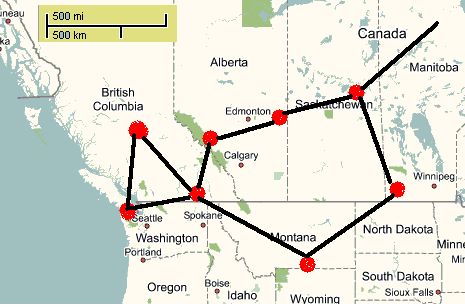
We covered a lot of ground. Here is a map of China and Canada on approximately the same scale. I have transpose my China route over to the Canada map to show route would extend from Victoria to Winnipeg, LaRonge to Billings, if traveled in Canada.
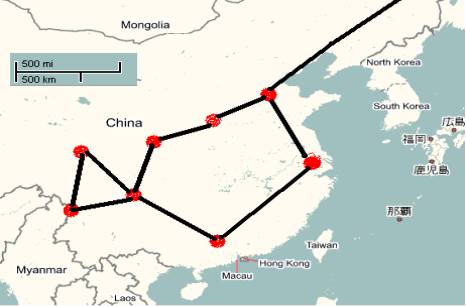
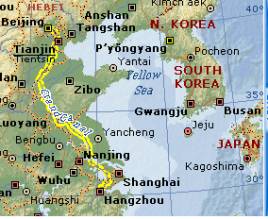
The 12 hour flight from Vancouver to Beijing went by quickly with the help a good book, a couple of movies and my favorite - sleep! After clearing Customs, we continued on to Shanghai that night by domestic Air China. The time in and around Shanghai was mainly retail therapy in the shopping districts and light factories for pearl, silk, gems and art production. During this leg we sailed down the Grand Canal for about 4 hours, past all types of industry on shore and marine traffic on the canal.
The Grand Canal of China is the world's oldest and longest canal. The building of the canal began in 486 B.C. during the Wu Dynasty. On and off construction lasted until 610 AD. The canal is 1,795 Km (1,114 miles) long with 24 locks and some 60 bridges. It runs from Beijing in the North to Hangzhou in the south.
I think the canal symbolizes what I like about China. It’s history goes back thousands of years and so much has survived for us to enjoy today. The Canal, art of all kind, temples, pagodas, the Great Wall (Qin dynasty 221 B.C.) and the Chinese culture evolving over all that time. The Chinese make historical reference that are from 4000 BC … BC!
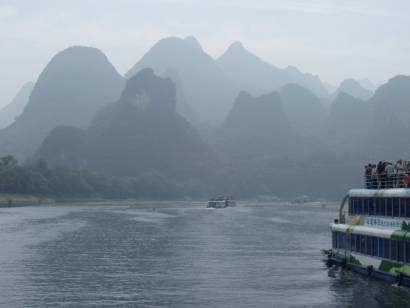
Where was I, … ah yes, leaving the Shanghai area. Our second domestic air leg took us to the sleepy little Chinese site of Guilin. Guilin only has a population of 500,000 people, so it is considered a small city by Chinese standards. Guilin is near an area known for its KARST topography along the Li River. Many Chinese paintings have aspects of this landscape in their background. Karst topography is best described in pictures, not words. So here are a couple of pics from our afternoon river cruise. The beauty of this area is in part within your imagination. Not unlike gazing at clouds on hot summer day, as one takes in the hill and mist, different images seem to rise out of the shapes and colors of the land. Horses, warriors and fishermen were just a few images that presented themselves.
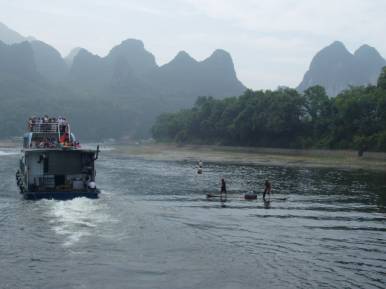
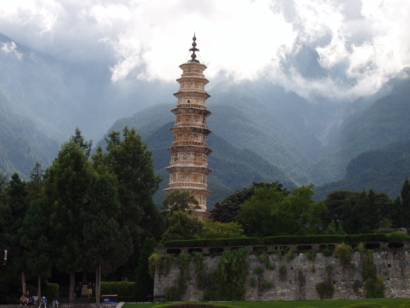
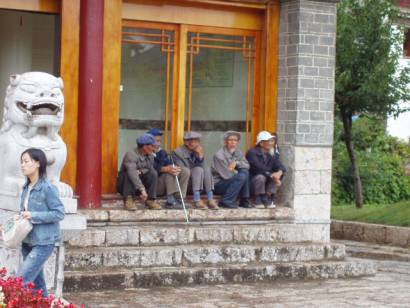
Most of the group was reluctant to leave Guilin. The city itself was fun, with a beautiful array of lights at night along the river, its bridges and surrounding buildings. The shopping, theatre life and other attractions left much to explore. Never the less … on we went out of the heat and humidity of Guilin to the mountain city of Kunming, the City of external Spring (5 million). Kunming and it “near by” villages of Dali and Lijang were full of cultural attractions, clothing, art and goods of China’s minority people. Most Chinese are from the HAN culture however there are regions within China were non-Han people have historically lived or roamed, as some are from nomadic backgrounds. All were very interested in sharing their culture: food, dance, craftwork, life style and such with us … in return for a dollar or two.
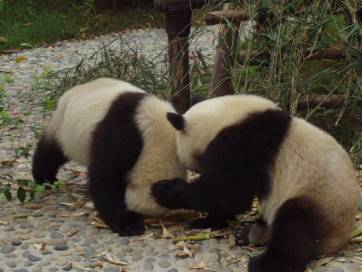
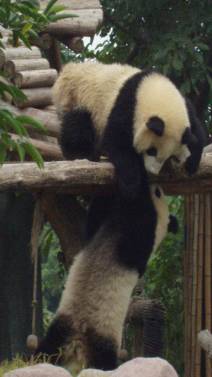
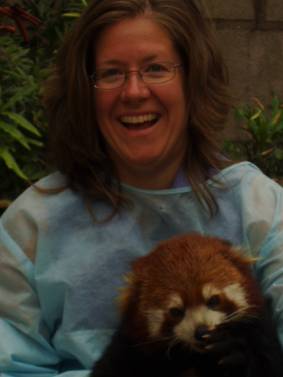
Chengdu, at near 10 million, was our next big city, the capital of Sechuan – home of my favorite food: Chinese Sechuan mmmm. The Hot and Sour soup was the best, but dish after dish had a great zing to it. (Did I tell you most meals were included !?) The real highlight of this trip was the Giant Panda Breeding Center in Chengdu. What can I say, I must have taken more than 100 pics of these guys. They were no more than 12 feet away and the cubs were in a super playful mood. That is my sister, holding a little red panda.
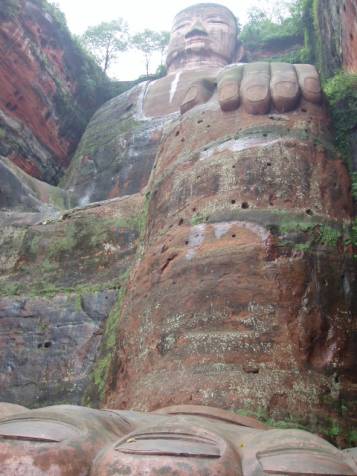
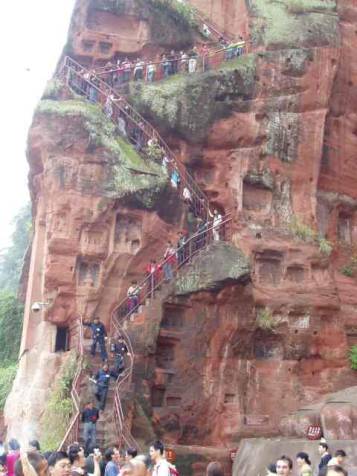
Leshan is also near Chengdu and has a “Must see” site which is a (very large) Grand Buddha. The day included seeing the Budda by boat and by walking from the top of the Budda site, to his feet, then back up again. Other than the 2 hour wait in line (our only long wait) it was a cool site to see.
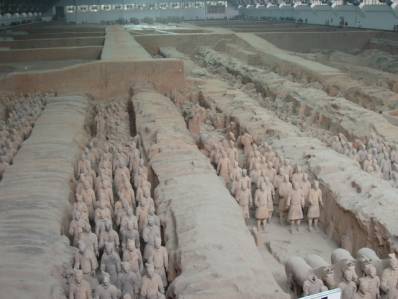
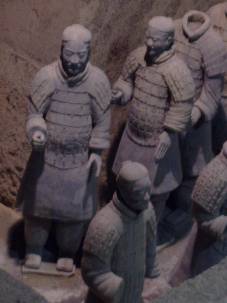
At this point my sister, myself and one other traveler left the group for a couple days to go see the Terra Cotta Warriors in the town of Xian, about 800km from Chengdu, but on our way to our last city of Beijing. The warriors were worth the detour and well worth seeing, but much like the guide book and TV had shown. The forced labour used to make the Warriors, not unlike the pyramids in Egypt, leaves one wondering how can an Emperor or any ruler waste so many resources building such self-indulgent monuments. It makes the Airbus and Sponsorship scandals look like pocket change exchanging hands.
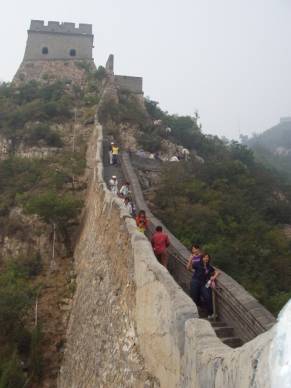
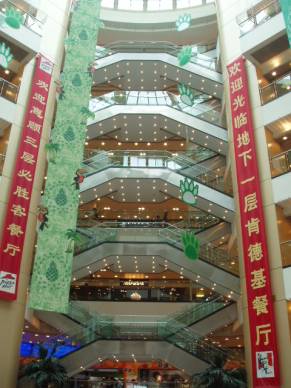
Other than all the traditional sites of Beijing, like the Forbidden City (temples), Tiananmen Square, Summer Palace, The Great Wall (at Juyongguan), a Cloisonne factory , and an eastern medicine education clinic, most of our remaining time was spent taking in “everyday” Beijing shops and street vendors.
If you plan to go, research the sites you want to see, review what trips are going when you want to go and take note of how the group travels (boat, train, plane, bus?) between sights. China is huge, you do not want to cross it on a bus, at least I would not want to do it that way. The Olympic is coming in 2008, maybe you could kill two birds with one stone … or go just after the Olympics in the tourist shadow that follows the Games.